AHARI
Andrey Kharin
I am a Technical Sound Designer and Audio Lead specializing in FMOD, Unreal Engine and gameplay-driven audio systems.
My work combines sound design, middleware architecture, gameplay implementation and dynamic mixing. I enjoy building scalable audio solutions that support both player experience and production efficiency.
Experienced in audio leadership, FMOD architecture, Blueprint-based implementation and workflow optimization.


Dungeon Dominator
As the sole audio designer on Dungeon Dominator, I was responsible for the complete audio production pipeline — from content creation and implementation to mixing and audio system design. Because the project is a pseudo-2D strategy, I placed special emphasis on crafting a unique mix that maintains clarity, depth, and directional focus across all gameplay layers.
Responsibilities
- End-to-End Audio Production
- FMOD Architecture
- Dynamic Mixing Systems
- Cross-Discipline Collaboration
Technical Highlights
 Dungeon Dominator FMOD Architecture
Challenge
As Dungeon Dominator continued to grow, the audio system needed to support an increasing number of gameplay features, room types, NPC activities, combat scenarios and environmental states.
Without a clear middleware architecture, the project would quickly become difficult to maintain, slowing down implementation, debugging and future content development.
Solution
I designed and maintained the entire FMOD project architecture from the ground up, focusing on scalability, consistency and long-term maintainability.
The project was organized around a structured event hierarchy, standardized naming conventions and a clear routing system. Reusable implementation patterns were established to ensure that new content could be integrated efficiently without introducing technical debt.
Special attention was given to bus organization, VCAs, parameter design and event categorization, allowing complex audio systems to remain manageable throughout development.
Result
The resulting FMOD project remained organized and easy to navigate despite continuous content expansion.
The architecture reduced implementation overhead, accelerated iteration speed and provided a stable foundation for complex gameplay audio systems, dynamic mixing solutions and future project growth.
Challenge
Dungeon Dominator is a management-focused game where players spend extended periods of time within the same environment. Maintaining immersion without creating listener fatigue was a key audio design challenge.
The dungeon needed to feel alive and constantly active, while avoiding repetitive ambience that could become distracting or exhausting during long play sessions.
Solution
I designed a layered atmospheric soundscape that combined environmental ambience, room-specific activity, creature presence and subtle environmental details into a cohesive audio experience.
Each room type contributed its own sonic identity to the dungeon, helping players intuitively understand the state and function of different areas while reinforcing the game's dark fantasy atmosphere.
Result
The resulting soundscape helped transform the dungeon into a living, evolving space rather than a static game environment.
Players could continuously receive subtle environmental feedback while remaining immersed during extended gameplay sessions without significant auditory fatigue.
Challenge
Dungeon Dominator allows players to manage multiple active rooms simultaneously, each containing its own ambient sounds, work processes, NPC activities and gameplay events. Without proper prioritization, audio from dozens of active spaces would quickly overlap, resulting in a cluttered and unfocused soundscape.
Solution
I designed a camera-driven audio focus system that dynamically adjusted the mix depending on the player's view and distance. When the camera was zoomed out, the system provided a broad overview of the dungeon by blending global ambience with a controlled representation of nearby rooms. As the camera moved closer, the mix automatically shifted focus toward visible gameplay spaces, gradually reducing unrelated room activity and environmental layers. This ensured that the player always received the most relevant audio information without overwhelming the mix.
Result
The system maintained environmental scale and immersion while preserving gameplay clarity, allowing the player to seamlessly transition between macro-level management and detailed room interaction without audio clutter.

14: Overmind
As a Technical Sound Designer, I focused on building responsive gameplay audio systems through FMOD and Unreal Engine. My work included vehicle audio, gameplay implementation, FMOD project refactoring and Blueprint-driven audio integration across a wide range of game features.
Responsibilities
- Vehicle Audio Systems
- Blueprint Audio Implementation
- Gameplay Audio Development
- FMOD Architecture Refactoring
Technical Highlights
FMOD project before and after
Challenge
When I joined the project, the existing FMOD structure had grown difficult to maintain due to inconsistent organization, unclear routing and fragmented implementation patterns.
As new features and content were added, the lack of a coherent architecture increased implementation complexity and slowed down iteration.
Solution
I performed a complete refactoring of the FMOD project, reorganizing event hierarchies, routing structures, naming conventions and implementation workflows.
The goal was to establish a clear and scalable architecture that could support future development while improving readability and maintainability for the audio team.
Existing systems were reviewed and restructured to ensure consistency across the project and reduce technical overhead during content production.
Result
The refactored FMOD project became significantly easier to navigate, maintain and expand.
The new structure improved implementation efficiency, reduced organizational complexity and provided a stable foundation for future audio development.
Challenge
Vehicles and spacecraft play a central role in player traversal and exploration.
The audio needed to communicate movement, speed and mechanical behaviour while remaining responsive across different gameplay situations.
Solution
I designed and implemented modular vehicle audio systems built around multiple operational states, including startup, movement and shutdown behaviours.
Vehicle sounds dynamically responded to speed, player input and camera positioning through FMOD parameters, allowing audio feedback to accurately reflect vehicle movement and state.
Layered propulsion, engine and movement elements were blended together to create a sense of scale, momentum and mechanical presence.
Result
The system provided responsive audio feedback that reinforced vehicle handling and movement while helping each vehicle maintain its own distinct sonic identity.
Challenge
The project contained a wide variety of gameplay mechanics, interactive systems and player tools that required audio support throughout development.
Relying on programmers for every audio implementation task would significantly slow down iteration and increase production overhead.
Solution
Leveraging my experience with Unreal Engine Blueprints, I independently integrated and maintained audio functionality across a large number of gameplay systems.
By directly connecting FMOD events, parameters and gameplay logic within Blueprint systems, I was able to rapidly prototype, implement and iterate on audio features without requiring dedicated engineering support.
This workflow allowed audio implementation to remain flexible while keeping iteration times extremely fast during production.
Result
The majority of gameplay audio systems could be implemented and refined directly by the audio department, reducing engineering dependency and enabling faster iteration throughout development.

Somnaut
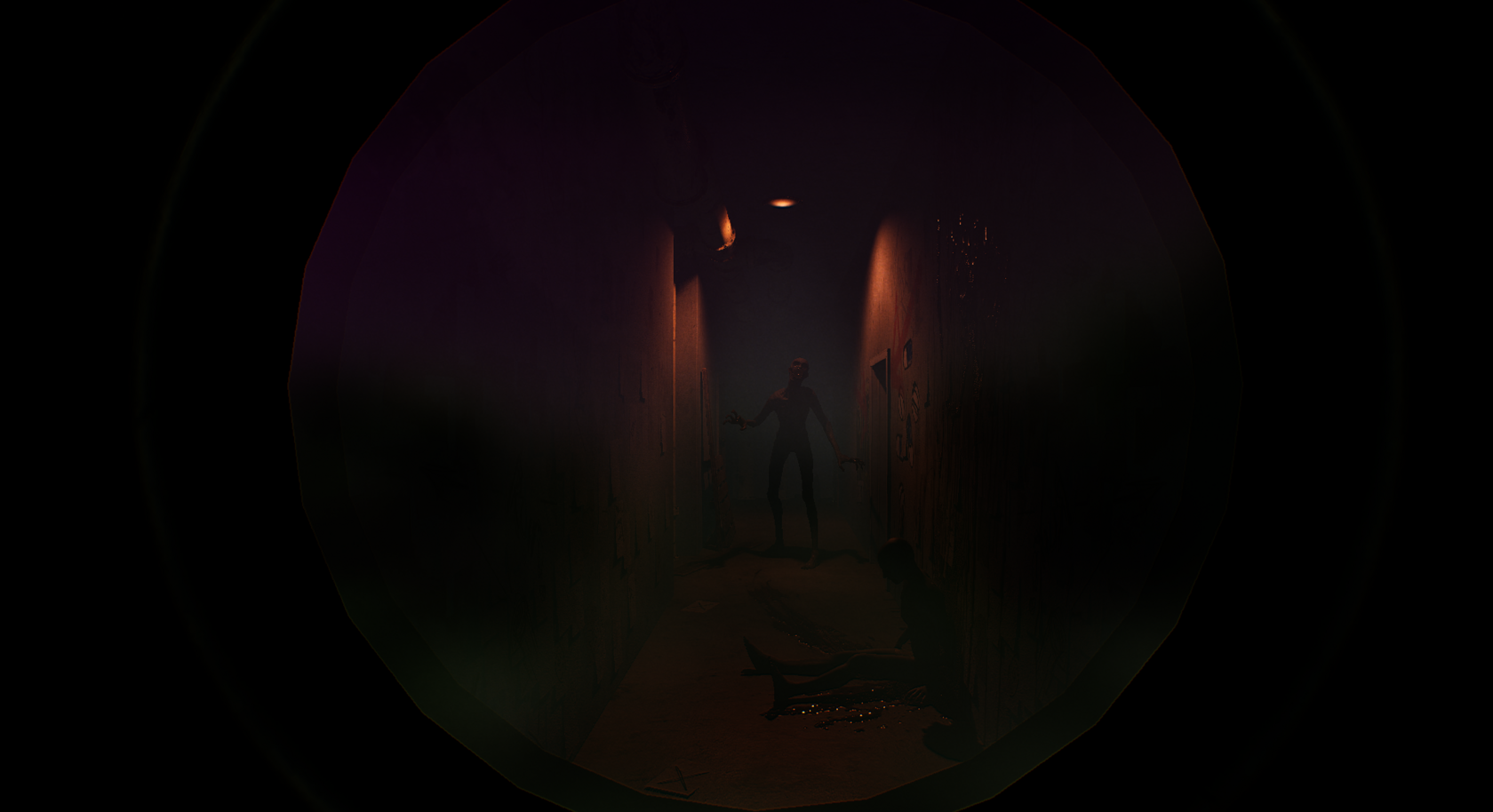
Working on Somnaut, I focused heavily on technical sound design for a survival horror experience, building complex and innovative audio systems in Unreal Engine and FMOD. This project gave me my deepest technical experience, including extensive work with Steam Audio for spatial audio, occlusion and environmental acoustics, as well as Blueprint-based gameplay audio implementation.
Responsibilities
- Vehicle Audio Systems
- Blueprint Audio Implementation
- Gameplay Audio Development
- FMOD Architecture Refactoring
Technical Highlights
FMOD project before and after
Challenge
When I joined the project, the existing FMOD structure had grown difficult to maintain due to inconsistent organization, unclear routing and fragmented implementation patterns.
As new features and content were added, the lack of a coherent architecture increased implementation complexity and slowed down iteration.
Solution
I performed a complete refactoring of the FMOD project, reorganizing event hierarchies, routing structures, naming conventions and implementation workflows.
The goal was to establish a clear and scalable architecture that could support future development while improving readability and maintainability for the audio team.
Existing systems were reviewed and restructured to ensure consistency across the project and reduce technical overhead during content production.
Result
The refactored FMOD project became significantly easier to navigate, maintain and expand.
The new structure improved implementation efficiency, reduced organizational complexity and provided a stable foundation for future audio development.
Challenge
Vehicles and spacecraft play a central role in player traversal and exploration.
The audio needed to communicate movement, speed and mechanical behaviour while remaining responsive across different gameplay situations.
Solution
I designed and implemented modular vehicle audio systems built around multiple operational states, including startup, movement and shutdown behaviours.
Vehicle sounds dynamically responded to speed, player input and camera positioning through FMOD parameters, allowing audio feedback to accurately reflect vehicle movement and state.
Layered propulsion, engine and movement elements were blended together to create a sense of scale, momentum and mechanical presence.
Result
The system provided responsive audio feedback that reinforced vehicle handling and movement while helping each vehicle maintain its own distinct sonic identity.
Challenge
The project contained a wide variety of gameplay mechanics, interactive systems and player tools that required audio support throughout development.
Relying on programmers for every audio implementation task would significantly slow down iteration and increase production overhead.
Solution
Leveraging my experience with Unreal Engine Blueprints, I independently integrated and maintained audio functionality across a large number of gameplay systems.
By directly connecting FMOD events, parameters and gameplay logic within Blueprint systems, I was able to rapidly prototype, implement and iterate on audio features without requiring dedicated engineering support.
This workflow allowed audio implementation to remain flexible while keeping iteration times extremely fast during production.
Result
The majority of gameplay audio systems could be implemented and refined directly by the audio department, reducing engineering dependency and enabling faster iteration throughout development.

ForMind
Working on ForMind, I focused on building an immersive sci-fi horror soundscape through environmental sound design, FMOD implementation and project-wide mixing. Using Unreal Engine and Blueprints, I followed the established audio production pipeline while putting particular emphasis on creating a detailed environment and maintaining clarity and tension throughout the mix.
Responsibilities
- Vehicle Audio Systems
- Blueprint Audio Implementation
- Gameplay Audio Development
- FMOD Architecture Refactoring
Technical Highlights
FMOD project before and after
Challenge
When I joined the project, the existing FMOD structure had grown difficult to maintain due to inconsistent organization, unclear routing and fragmented implementation patterns.
As new features and content were added, the lack of a coherent architecture increased implementation complexity and slowed down iteration.
Solution
I performed a complete refactoring of the FMOD project, reorganizing event hierarchies, routing structures, naming conventions and implementation workflows.
The goal was to establish a clear and scalable architecture that could support future development while improving readability and maintainability for the audio team.
Existing systems were reviewed and restructured to ensure consistency across the project and reduce technical overhead during content production.
Result
The refactored FMOD project became significantly easier to navigate, maintain and expand.
The new structure improved implementation efficiency, reduced organizational complexity and provided a stable foundation for future audio development.
Challenge
Vehicles and spacecraft play a central role in player traversal and exploration.
The audio needed to communicate movement, speed and mechanical behaviour while remaining responsive across different gameplay situations.
Solution
I designed and implemented modular vehicle audio systems built around multiple operational states, including startup, movement and shutdown behaviours.
Vehicle sounds dynamically responded to speed, player input and camera positioning through FMOD parameters, allowing audio feedback to accurately reflect vehicle movement and state.
Layered propulsion, engine and movement elements were blended together to create a sense of scale, momentum and mechanical presence.
Result
The system provided responsive audio feedback that reinforced vehicle handling and movement while helping each vehicle maintain its own distinct sonic identity.
Challenge
The project contained a wide variety of gameplay mechanics, interactive systems and player tools that required audio support throughout development.
Relying on programmers for every audio implementation task would significantly slow down iteration and increase production overhead.
Solution
Leveraging my experience with Unreal Engine Blueprints, I independently integrated and maintained audio functionality across a large number of gameplay systems.
By directly connecting FMOD events, parameters and gameplay logic within Blueprint systems, I was able to rapidly prototype, implement and iterate on audio features without requiring dedicated engineering support.
This workflow allowed audio implementation to remain flexible while keeping iteration times extremely fast during production.
Result
The majority of gameplay audio systems could be implemented and refined directly by the audio department, reducing engineering dependency and enabling faster iteration throughout development.

Spirit Fusion
For Spirit Fusion, I handled the audio production from the ground up, creating and implementing the game's soundscape in Unity and FMOD. This project also marked my first hands-on experience with Unity, including writing C# scripts and independently connecting FMOD events to gameplay systems.
Responsibilities
- Vehicle Audio Systems
- Blueprint Audio Implementation
- Gameplay Audio Development
- FMOD Architecture Refactoring
Technical Highlights
FMOD project before and after
Challenge
When I joined the project, the existing FMOD structure had grown difficult to maintain due to inconsistent organization, unclear routing and fragmented implementation patterns.
As new features and content were added, the lack of a coherent architecture increased implementation complexity and slowed down iteration.
Solution
I performed a complete refactoring of the FMOD project, reorganizing event hierarchies, routing structures, naming conventions and implementation workflows.
The goal was to establish a clear and scalable architecture that could support future development while improving readability and maintainability for the audio team.
Existing systems were reviewed and restructured to ensure consistency across the project and reduce technical overhead during content production.
Result
The refactored FMOD project became significantly easier to navigate, maintain and expand.
The new structure improved implementation efficiency, reduced organizational complexity and provided a stable foundation for future audio development.
Challenge
Vehicles and spacecraft play a central role in player traversal and exploration.
The audio needed to communicate movement, speed and mechanical behaviour while remaining responsive across different gameplay situations.
Solution
I designed and implemented modular vehicle audio systems built around multiple operational states, including startup, movement and shutdown behaviours.
Vehicle sounds dynamically responded to speed, player input and camera positioning through FMOD parameters, allowing audio feedback to accurately reflect vehicle movement and state.
Layered propulsion, engine and movement elements were blended together to create a sense of scale, momentum and mechanical presence.
Result
The system provided responsive audio feedback that reinforced vehicle handling and movement while helping each vehicle maintain its own distinct sonic identity.
Challenge
The project contained a wide variety of gameplay mechanics, interactive systems and player tools that required audio support throughout development.
Relying on programmers for every audio implementation task would significantly slow down iteration and increase production overhead.
Solution
Leveraging my experience with Unreal Engine Blueprints, I independently integrated and maintained audio functionality across a large number of gameplay systems.
By directly connecting FMOD events, parameters and gameplay logic within Blueprint systems, I was able to rapidly prototype, implement and iterate on audio features without requiring dedicated engineering support.
This workflow allowed audio implementation to remain flexible while keeping iteration times extremely fast during production.
Result
The majority of gameplay audio systems could be implemented and refined directly by the audio department, reducing engineering dependency and enabling faster iteration throughout development.
